
The takeaways
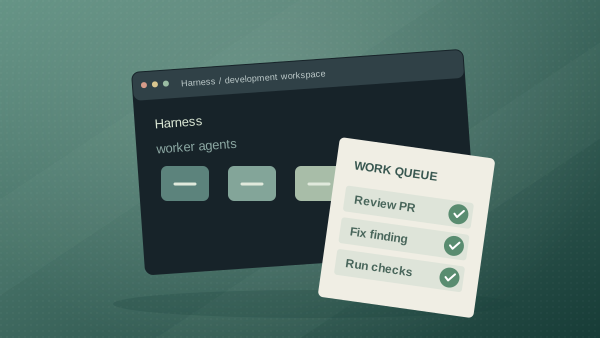
- Harness worker agents focus on repetitive work between code creation and deployment.
- Code review and vulnerability tickets connect automation to existing team workflows.
- The discussion puts developer, security, and auditor collaboration at the center of governed delivery.
In this episode
Enhancing DevSecOps with AI: A Deep Dive into Harness’ Worker Agents
In the fast-paced world of software development, integrating security into the DevOps process is no longer optional—it’s essential. With the rise of AI technologies, tools are evolving to meet the demands for speed and security. In this post, we’ll explore how Harness’ new worker agents are set to revolutionize the DevSecOps landscape, offering autonomous capabilities to streamline workflows while enhancing security and compliance.
The Growing Need for AI in DevSecOps
With increasing threats in cybersecurity, organizations are under pressure to adapt their software development lifecycles. The traditional methods of integrating security often fell short, leading to vulnerabilities in production environments. As Rudy Seber, a Principal Solutions Engineer at Harness, highlighted, there is a pressing need to provide commanding officers in federal practices with the best information for risk assessments. This is where AI comes into play, providing the necessary speed and accuracy in evaluations that human operators alone cannot achieve.
Understanding Worker Agents: What Are They and How Do They Function?
Harness recently launched worker agents, which are designed to fill the gap in the DevSecOps pipeline. Unlike generic AI tools, these agents operate within the governance frameworks that organizations already trust. They manage the critical middle ground between writing code and deploying it securely, ensuring that all processes adhere to compliance standards.
Key Features of Worker Agents
- Autonomous Task Execution: Worker agents are capable of executing repetitive tasks autonomously, reducing cognitive load on developers and allowing them to focus on higher-level functions.
- Integration with Existing Tools: The agents connect seamlessly with existing systems, such as ticketing platforms like Jira and ServiceNow, streamlining workflows and improving efficiency.
- Proactive Security Measures: By identifying vulnerabilities earlier in the software development lifecycle (SDLC), worker agents enable teams to adopt a “shift left” strategy in security, addressing weaknesses before they reach production.
AI-Driven Automation: Enhancing Productivity and Security
Kalyan Venkata, also a Principal Solutions Engineer at Harness, emphasized the need for organizations to allow non-developers, such as healthcare practitioners, to contribute to application deployments safely. The worker agents facilitate this by providing a secure and compliant environment for application development, enabling broader participation.
How Worker Agents Enhance Efficiency
- Streamlining Code Review Processes: Automated code reviews can catch vulnerabilities early, reducing the time spent on manual checks.
- Ticket Management: Worker agents can automatically create tickets for identified vulnerabilities, alleviating the burden on security teams.
- Integration Across Teams: By bringing together various stakeholders, including developers, security teams, and auditors, worker agents make it easier to maintain compliance and security standards.
Real-World Applications: Transforming DevSecOps
At a recent AWS public sector event, discussions centered around how Harness is addressing the unique challenges faced by federal agencies. By leveraging worker agents, organizations can ensure that all personnel—from developers to auditors—are equipped to handle the demands of modern software development securely.
Use Cases in Civilian and Federal Sectors
- Healthcare Sector: Organizations are exploring how to empower healthcare professionals to manage their applications while adhering to strict compliance measures. Worker agents can facilitate this by automating security checks and ensuring that all deployments meet regulatory standards.
- Military Applications: For military organizations, the focus is on ensuring that warfighters are protected from emerging threats, including zero-day vulnerabilities. Worker agents help provide the necessary security oversight in these critical environments.
Conclusion: The Future of DevSecOps with Harness’ Worker Agents
The integration of AI into DevSecOps is not just about enhancing speed—it’s about fundamentally changing how organizations approach security and compliance. Harness’ worker agents represent a significant step forward, offering automated solutions that empower teams to deliver secure software efficiently. As the landscape of software development evolves, embracing AI-driven tools will be crucial for staying ahead of threats and maintaining compliance.
Key Takeaways
- AI is transforming the DevSecOps landscape by automating routine tasks and enhancing security measures.
- Harness’ worker agents provide a secure, autonomous solution for managing code deployments.
- By integrating these agents into existing workflows, organizations can improve productivity and reduce the risk of vulnerabilities in production environments.
Want to see these AI-powered worker agents in action?
Check out the demo and detailed documentation and discover how you can tailor automation to fit your organization’s needs.
Harness.io [Harness: Worker Agents] (https://www.harness.io/products/platform/worker-agents)